
-
acc1 Account


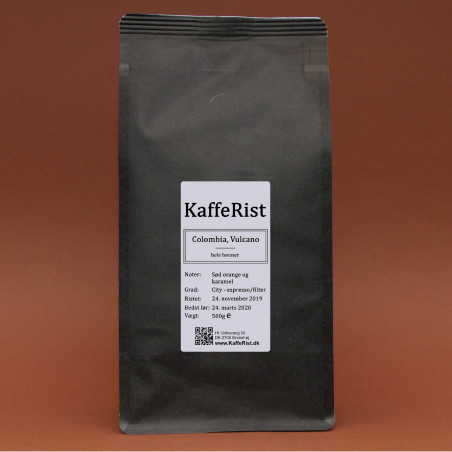
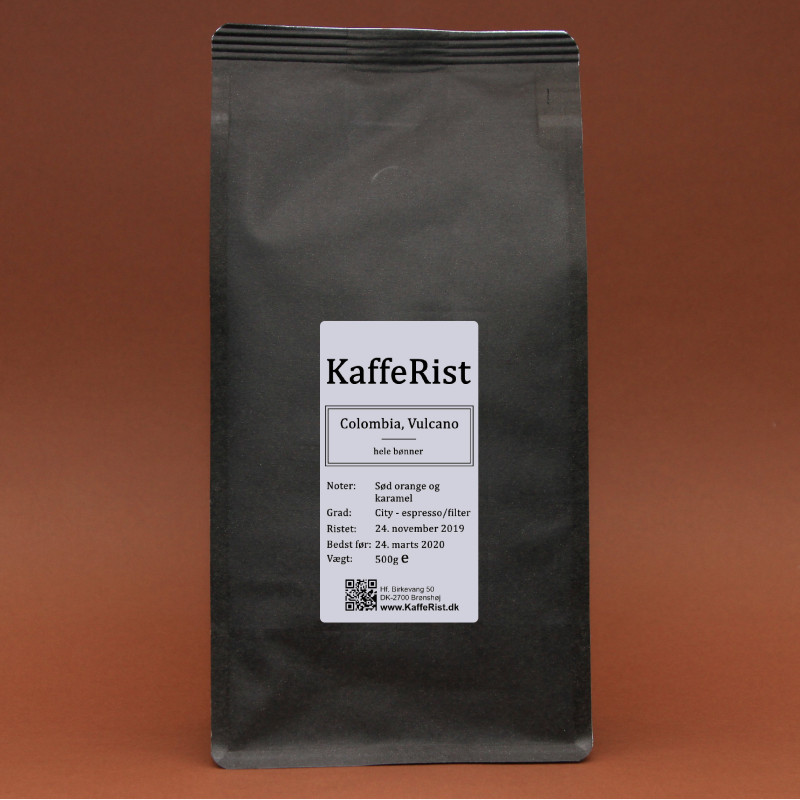
Colombia, Vulcano Cauca
Smagsnoter: Sød og ballanceret, orange, karamel og lang eftersmag
Området Cauca (29000km2) grænser op til Huila som også er et kendt kaffeområde i Colombia. I grænselandet mellem Cauca og Huila ligger flere vulkaner, det er på disse vulkanske bjerge at denne kaffe dyrkes, mikroklimaet og den vulkanske jord giver kaffen sin karakteristika, og da kaffen plukkes i hånden fås en rigtig ensartet og god kvalitets kaffe.
Kaffeplanterne vokser i 1850-2000m højde og er af Caturra typen
The Cauca coffee producing region lies north of the Patía River, and is surrounded by the Puracé Volcano (4600masl), the Colombian Massif (Macizo Colombiano) and the foothills of the Western Mountain Range that stretches out to the Pacific Ocean in the southwest. The Massif gives birth to the central and western ranges of the Colombian Andes as well as the country’s two most important rivers: the Cauca and Magdalena Rivers.
When it comes to soil characteristics, the coffee growing area counts with soils that are derived from volcanic ashes. Nearby volcanoes such as Sotará or Puracé, in the east and northeast, and the snow-capped Huila volcano, towards the center of the region, also generate colder winds positively affecting coffee quality.
Because it is near the Equator, sunlight in the Cauca coffee-growing region is relatively constant all year round, receiving 24.4 mega joules per square meter per day, with a small standard deviation on this average.
The Cauca coffee region receives the benefit of the Guaitará and Juanambú river basins, as well as the Patía River basin, which, on its course to the Pacific Ocean forms the Hoz de Minamá. The latter is a depression area in the mountain range that generates unique climatic conditions which positively influence coffee production in near-by Nariño, but that contributes to isolate the production areas in Cauca del Norte.
These homogeneous climatic conditions occur because the tall mountains surrounding the area protect it from the wind and humidity of the Pacific and from the trade winds from the south. This is why the Cauca region does not suffer brusque climate or temperature changes throughout the year. These balanced conditions mean that the quality of the coffee grown there is homogeneous and constant.
Being a relatively high area with lower average temperatures, the Arabica coffee trees that grow in the area retain a higher percentage of acids and sugar within the coffee beans. These acidic, sweet and mild coffee attributes are extremely sought after; in fact, CAFÉ DE CAUCA has a characteristically sweet flavour, a strong caramel aroma and fragrance, with high acidity, medium-body, generally balanced, clean and mild in cup qualities with some sweet, floral notes.
Specifikke referencer
No customer reviews for the moment.